
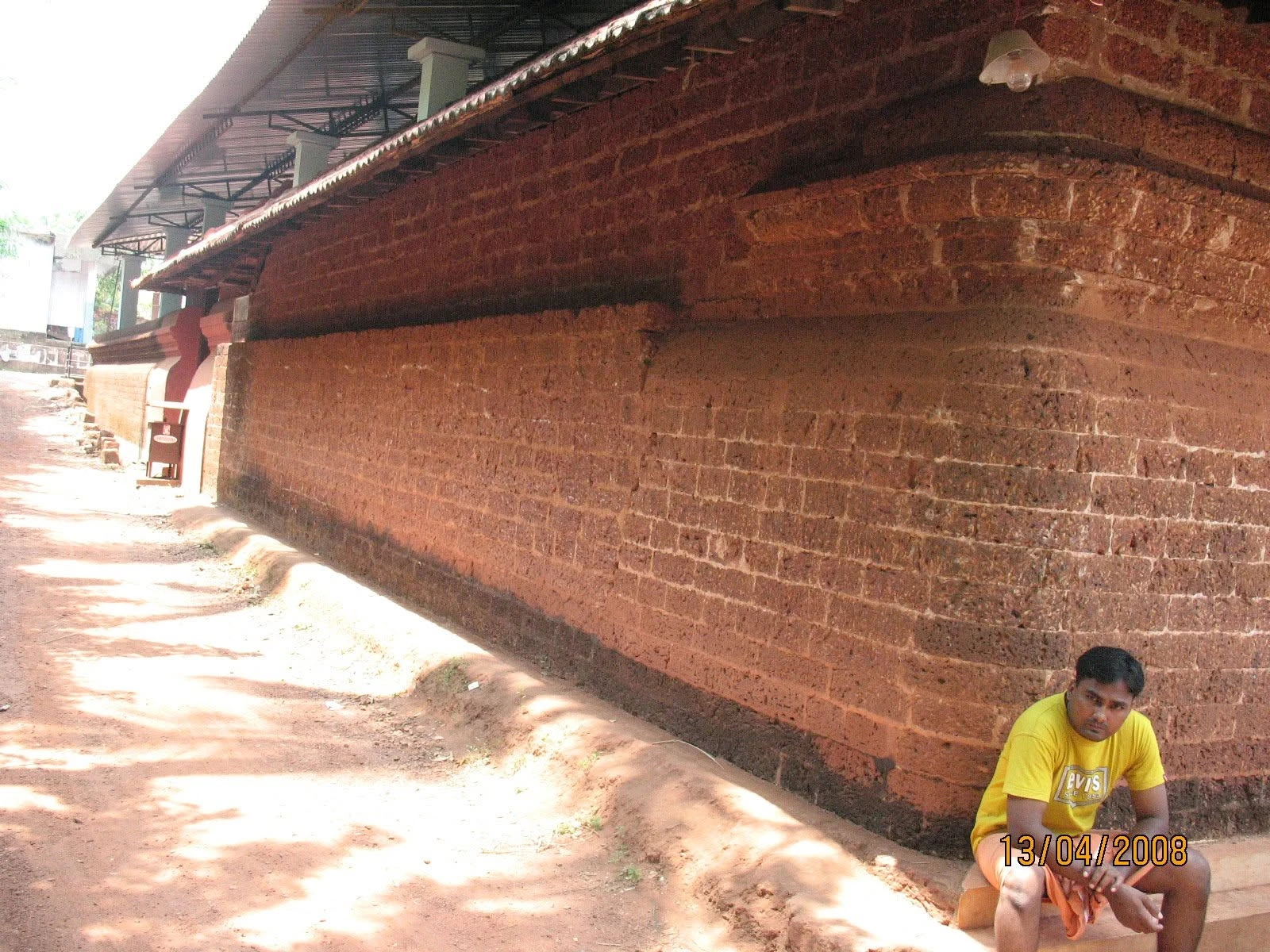
The temple’s story is held in its worship, family traditions and local memory. The accounts below come from the history supplied by the temple. Legends and inherited beliefs are identified as such; they are not presented as dated historical evidence.
01 / HERITAGE
The tradition of Parashurama’s consecration
At Pallikunnu in Kannur, Mookambika worship brings together prayer, learning and traditions handed down through families. The temple’s account of its beginnings belongs to this inherited memory.
Temple legend places Pallikunnu among the 108 Durga temples believed to have been consecrated by Parashurama. It tells of Bhargava Rama establishing the deity in the Treta Yuga, in the presence of Sage Bhrigu.
The same account says that Parashurama travelled west after the consecration, then returned to build the temple, mandapam, surrounding walls and gateways.
02 / HERITAGE
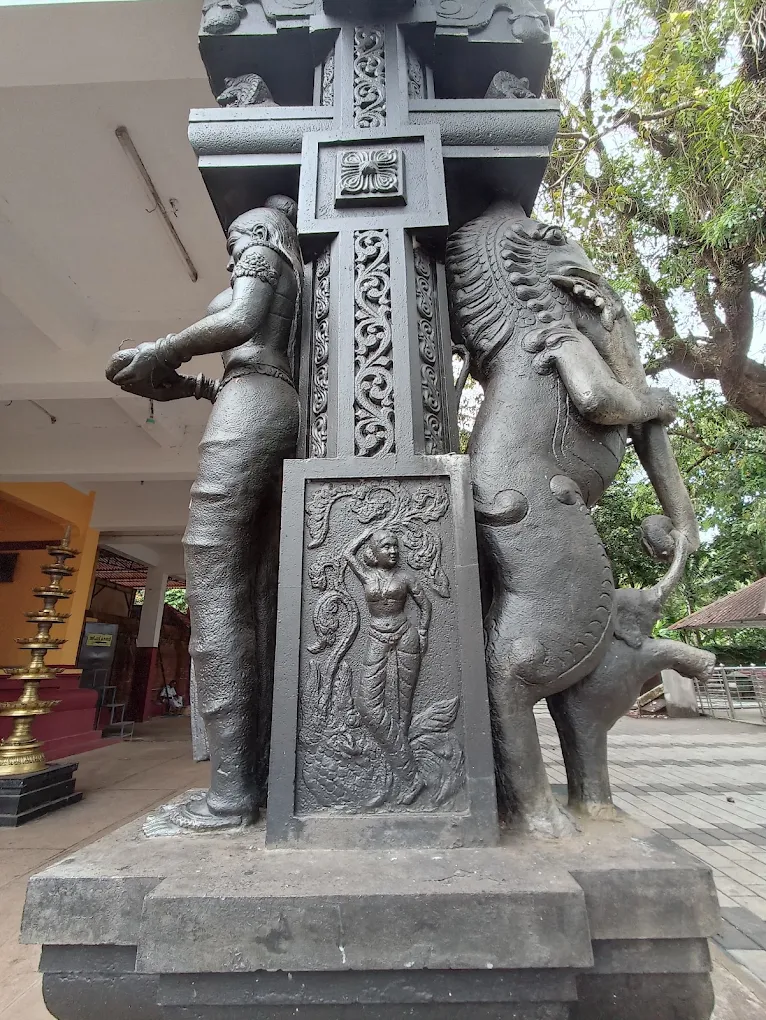
Strength and wisdom in Mookambika worship
Temple tradition says that Parashurama gathered Brahmins from the sixty-four villages to establish the form of worship followed at Pallikunnu.
In this account, the Goddess worshipped as Mahishasuramardini, the slayer of Mahishasura, is also approached in the gentle Saraswati form associated with knowledge and learning.
The two forms bring strength and wisdom together in the temple’s understanding of the Goddess.
Devotees turn to her for courage and protection, and for help in learning, creative work and understanding.
The legend also names Kattumadam Namboothiripad as the Tantri appointed by Parashurama, with responsibility for rituals, religious observances and traditional temple affairs.
03 / HERITAGE
Royal patronage and the Kattumadam tradition
The temple’s traditional account connects its care and worship with the Mushika and Kolathiri rulers of North Kerala.
It recalls restoration and royal support during the Mushika period, including the upkeep of the temple and its observances.
After the decline of the Mushika dynasty, responsibility for this care is said to have passed to the Kolathiri rulers.
The account describes special worship under Kolathiri patronage, guided by the Kattumadam Tantri.
The Goddess was revered as Ashtaishwarya Pradayini — the giver of eight forms of prosperity.
According to tradition, the royal family turned to Mahishasuramardini worship in the hope of relief from difficulties affecting the dynasty.
The temple is said to have been gifted to the Kattumadam household because of the Tantri’s knowledge of Mahishasuramardini Seva.
These accounts explain the place of Kattumadam in the temple’s ritual tradition. They are presented here as inherited accounts, without assigning dates that the supplied material does not establish.
04 / HERITAGE
Saraswati, Lakshmi and Durga in daily worship
At Pallikunnu, the Goddess is worshipped in the three forms of Saraswati, Lakshmi and Durga.
The temple’s account connects the arrangement of worship with the Kattumadam household dividing into two branches.
It describes morning worship by Iledam Mana, midday worship by Moothedam Mana, and evening worship by the appointed temple priest.
The three daily poojas honour complementary aspects of the same Mother.
Saraswati — learning and the arts
In the morning, Saraswati is remembered as the Goddess of knowledge, learning, speech, music and the arts.
Lakshmi — well-being and prosperity
At midday, the Lakshmi form expresses abundance, well-being, auspiciousness and prosperity.
Durga — courage and protection
In the evening, Durga is worshipped for strength, protection and the victory of righteousness over evil.
In this understanding of the Divine Mother, wisdom, well-being and strength belong together.
This threefold worship remains part of Pallikunnu’s devotional identity.
05 / HERITAGE
First letters in Saraswati’s presence
The Saraswati form of Mookambika gives Vidyarambham a special place at Pallikunnu. The ceremony introduces children to letters and learning.
Families bring their children before Amma with a prayer for the education ahead.
The first letters mark a beginning; the learning they open continues through life.
Students and devotees also pray for understanding, clarity of thought and the ability to express themselves through study and the arts.
The temple’s account identifies Thrimadhuram and fruit among the offerings associated with its worship.
Teachers, scholars and artists share this connection with Saraswati alongside families beginning a child’s education.
06 / HERITAGE
The legend of Sankara Variyar
One of Pallikunnu’s legends tells of Sankara Variyar, a temple attendant, and a dream of the Goddess.
In the story, Mookambika appears to him at night and tells him of a fruit in the northern temple kitchen.
She asks him to take it and eat it.
Sankara Variyar follows the instruction and puts the peel in a drainage channel.
The account says that knowledge and poetic ability then awaken in him through the Goddess’s grace.
He becomes known as Sankara Kavi and composes verses in praise of the Mother.
A related account tells of a priest who eats the discarded peel and receives poetic ability, becoming known as Thola Kavi.
For devotees, this legend expresses the hope that learning and creative ability may flourish in an ordinary life. It is a story of faith, rather than a verified account of these events.
07 / HERITAGE
Cherusseri in local memory
Local tradition also connects Pallikunnu with the Malayalam poet Cherusseri Namboothiri.
It holds that he once served as a priest at the temple.
This connection is preserved here as a local belief; the material supplied for the website does not establish it through documentary evidence.
Alongside the stories of Sankara Kavi and Thola Kavi, it reflects the place of poetry and creative expression in the temple’s Saraswati tradition.
These remembered connections give devotees a way to relate their own learning and creative work to worship.
08 / HERITAGE
The belief in worship after nightfall
Temple tradition includes a belief that the Devas worship Mookambika at night.
The legend begins with a priest opening the sanctum one morning and finding water in the conch used for worship.
The account says that this led to Prashna Chinthana, a traditional astrological and ritual inquiry.
According to the belief, the inquiry indicated that the Devas had come to offer worship during the night.
The story connects this revelation with the practice of leaving ritual vessels, the conch and flowers in the sanctum after the daily rites.
This is presented as a devotional belief within the temple tradition, expressing a sense of worship beyond what people can see.
09 / HERITAGE
The tradition continues in temple life
Pallikunnu’s identity is held in both its inherited stories and the worship that continues today.
The Parashurama legend, accounts of royal patronage, the Kattumadam ritual tradition and the three forms of daily worship each have a place in that account.
Stories of dreams, poetry and night worship carry the devotional memory of the temple.
Through them, devotees approach Mahishasuramardini’s strength, Saraswati’s wisdom and Lakshmi’s well-being as aspects of the same Mother.
For a visitor today, that connection may begin with darshan, an offering, or a child’s first letters.
The tradition continues through these acts of worship and through the families who return to Amma’s sannidhi.